Euro
Nine Months in the Eurozone: What Changed for Investors
No more currency conversion, euro mortgages near 2.5%, and foreign investment up sharply.
Type at least two letters to see matching pages.
Bulgaria at a glance · Checked October 2026
Why Invest in BulgariaStart here
Four guided paths, each with the numbers, the steps and the people who can help you finish.
Sofia districts, the coast and ski towns: prices, yields, fees and how foreigners buy.
Real Estate GuideA streamlined company-registration process and a 10% corporate income-tax rate.
Set Up Business in BulgariaEU registration, Type D visas, investor routes and Bulgarian citizenship.
Residency PathfinderSalaries, office rents, utilities and taxes: the real cost of operating in Bulgaria.
Cost of Doing BusinessBulgarian Business Directory
Find lawyers, accountants, translators, recruiters and specialist suppliers. Every company has a profile in English and Bulgarian, and listing is free.
It may already be listed. Find it and take it over with your work email, or add it free in a few minutes.
01 Why Bulgaria
An EU member since 2007, in Schengen since 2025 and in the euro area since January 2026, with a flat 10% tax on company profits and personal income. Twelve advantages, each set out with current figures and sources.
02 Business & Tax
Company forms, registration, taxes, banking, customs and EU funding, explained for foreign founders and investors, with the fees, deadlines and steps.
03 Residency
Visas, residence permits, work permits and posting rules for EU and non-EU citizens: who needs what, the documents, the fees and how long it takes.
Residency Guide
04 Sectors
Sixteen sector profiles, from manufacturing, automotive and IT to energy, logistics and tourism, with output, exports, employers and what is changing.
All 16 Sectors
05 Real Estate
Prices, rents and yields in Sofia, the coast and the mountains, the fees and taxes, and how foreigners buy homes, land and commercial property.
06 About Bulgaria
Key facts, history, language, climate, public holidays, food and the people Bulgarians are proud of: the country behind the numbers.
About BulgariaCompare
Tax rates and labour costs in Bulgaria and four other EU countries in the region, from the latest comparable data.
| Measure | Bulgaria | Romania | Hungary | Poland | Czechia |
|---|---|---|---|---|---|
| Corporate income tax, 20261 | 10% | 16% | 9% | 19% | 21% |
| Top personal income tax, 20262 | 10% | 10% | 15% | 36% | 23% |
| Standard VAT rate, 20263 | 20% | 21% | 27% | 23% | 21% |
| Labour cost per hour worked, 20254 | €12.0 | €13.6 | €15.2 | €19.1 | €19.8 |
| Net annual earnings, average single worker, 20255 | €14,450 | €13,877 | €15,432 | €19,086 | €20,901 |
| Statutory minimum wage a month, July 20266 | €620 | €825 | €906 | €1,119 | €923 |
Featured members
Featured is paid placement. It is not an editorial endorsement.
Grow with InvestBulgaria
Listing is free. Featured and Partner members get top placement and direct enquiries, always labelled as paid.
FREE
Free
Your website is shown as text, without a link.
CLICKABLE LINK
€149 / year
Paid links are marked as sponsored, as search engines require.
MOST POPULAR
From €490 / year
€690 for legal, accounting, real estate and relocation. +€190 for each extra category.
ONE PER CATEGORY
From €1,900 / year
Up to €2,900 for the largest categories and regions.
€7,500 / year
One exclusive sponsor, or up to three sponsors at €4,500 each.
Ask About SponsorshipPrices are per year and include 20% Bulgarian VAT. EU companies with a VAT number and companies outside the EU pay the price without VAT. Pay by card, SEPA Direct Debit, PayPal or bank transfer. Paid links to members’ websites are marked as sponsored, as search engines require.

Investor tools
10% profit tax · 5% dividend tax
Profit tax (10%)
€10,000
Dividend tax (5%)
€4,500
You keep
€85,500
Combined burden 14.5% for a Bulgarian resident individual shareholder who takes all profit as a dividend. Information only, not tax advice.
Regions and locations
Capital · Services · IT
The largest property market and business hub, with Vitosha on its doorstep.
Manufacturing
Home of the Trakia Economic Zone and some of the year's largest industrial investments.
Port · Tourism
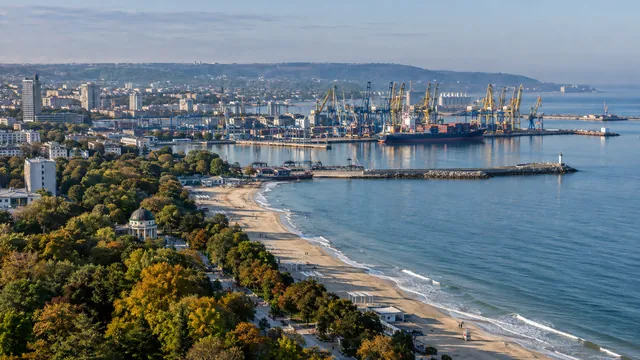
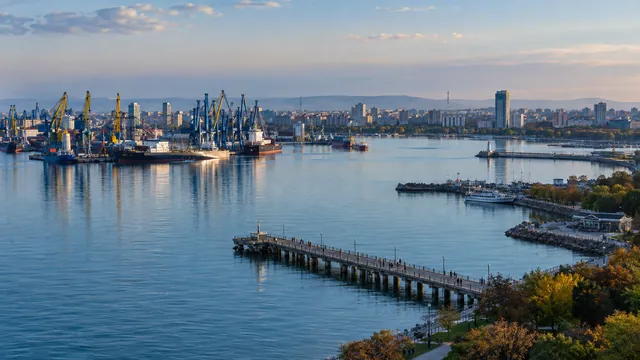
Bulgaria's sea capital: port, university city and coastal property.
Danube · Logistics
The largest Bulgarian city on the Danube, a river port and gateway to Romania.
Ski · Year-round
Pirin ski resort with a growing remote-worker and rental market.
Port · Energy
Southern Black Sea gateway with logistics, energy and resort property nearby.
The library · Since 2004
Practical guides on costs, labour, tax and law, refreshed for the eurozone era.
Taxes, operating costs, salaries, incentives and the property market, updated for October 2026.
All Fact Sheets
Profit, income, dividend and VAT rules for companies and individuals.
Read the Guide
What Bulgarian talent costs by sector and city.
See Salaries
Growth, inflation, wages, FDI and public debt against the EU, updated from Eurostat.
View Charts
Interviews and briefings on doing business in Bulgaria.
Watch Videos
Euro
No more currency conversion, euro mortgages near 2.5%, and foreign investment up sharply.
Foreign Investment
Germany, Luxembourg and Austria led the inflows, according to central bank data.
Real Estate
Colliers counts 7,630 apartments under construction for sale in the capital.
Bulgaria adopted the euro on 1 January 2026, and the euro has been its official currency since that date. Businesses trading and investing with the rest of the euro area no longer need to convert currencies.
Bulgaria’s corporate income tax and personal income tax rates are both 10%, and the dividend tax rate is 5%. For a Bulgarian resident individual shareholder who takes all company profit as a dividend, the combined tax burden is 14.5%.
Company registration takes 3–7 working days when the founder is in Bulgaria, or 2–3 weeks for a founder abroad using a lawyer. The online Commercial Register fee is €28.12; opening an operating bank account can take 3–5 weeks for a founder abroad.
The legal minimum capital for a Bulgarian limited company, such as an EOOD or OOD, is €1. Founders of any nationality can establish one, and they do not need to be resident in Bulgaria.
Bulgaria’s labour cost was €12.0 per hour in 2025, compared with €34.9 per hour across the EU. This provides a benchmark for businesses assessing employment costs.
Bulgaria has been an EU member since 2007 and a full Schengen member since 1 January 2025. EU membership gives businesses access to the single market, while Schengen membership means no border checks with other Schengen countries.